
One, Two… Collection.
I’ve noticed I tend to collect and display things in threes.
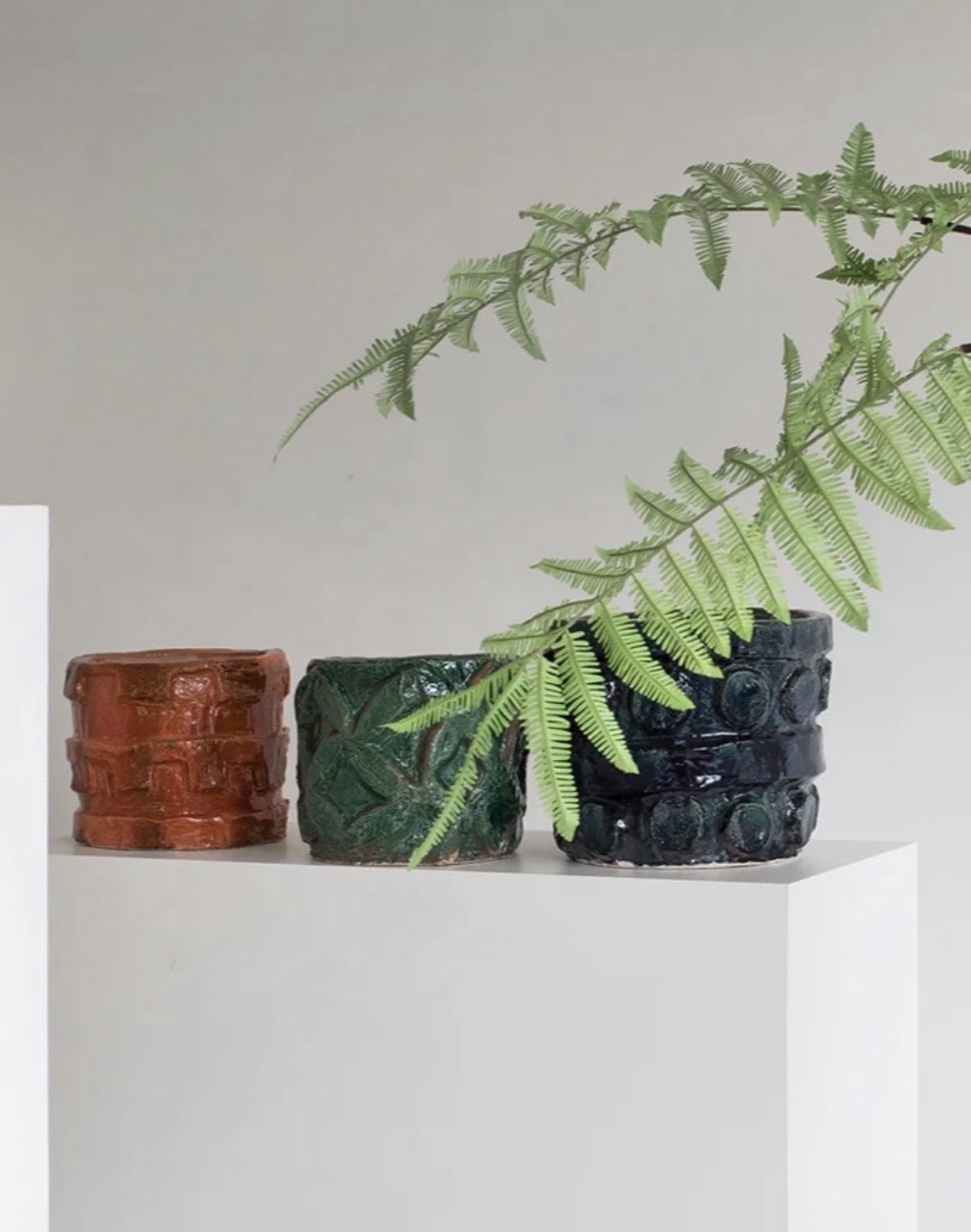
It’s rarely a conscious decision. Something catches my eye, another comes along that seems to belong with it, and then a third somehow makes the whole thing feel complete. Different colours of the same character. Three ceramic forms. A small gathering of objects with just enough in common to suggest they should know each other.
Perhaps it’s a designer’s habit. Perhaps it’s simply a convenient excuse for buying another one.
Either way, there’s something satisfying about three.
Finding a rhythm In design and display, grouping objects in threes is a familiar approach, often described as the “rule of three”. It’s a useful starting point rather than a rule that needs obeying. Three identical objects, badly spaced, won’t suddenly become a masterpiece.
But three does give the eye something to work with.
A single object holds your attention on its own. A pair invites comparison: this one and that one, matching or different. Add a third and there are more relationships to explore. Your eye can move between them, picking up a repeated colour, a change in scale or a shape that appears in slightly different forms. There’s a rhythm to it. Enough repetition to connect the pieces, enough variation to keep looking.
Balance with a little movement Pairs can lend themselves to symmetry: one at either end of a shelf, two pictures side by side. That can be beautiful, but I’m often drawn to arrangements that feel a little less settled.
Three objects offer room to shift things around. A taller piece can sit behind two smaller ones. A heavier shape can be balanced by two lighter forms. The spaces between them become part of the arrangement. You move something a few centimetres, stand back, move it again, and eventually leave it almost where it started. All part of the process.
What interests me is that sense of balance that still has a little movement in it. Each object has its own presence, while contributing to the group.
Similar, but different The most appealing groups don’t always match exactly.
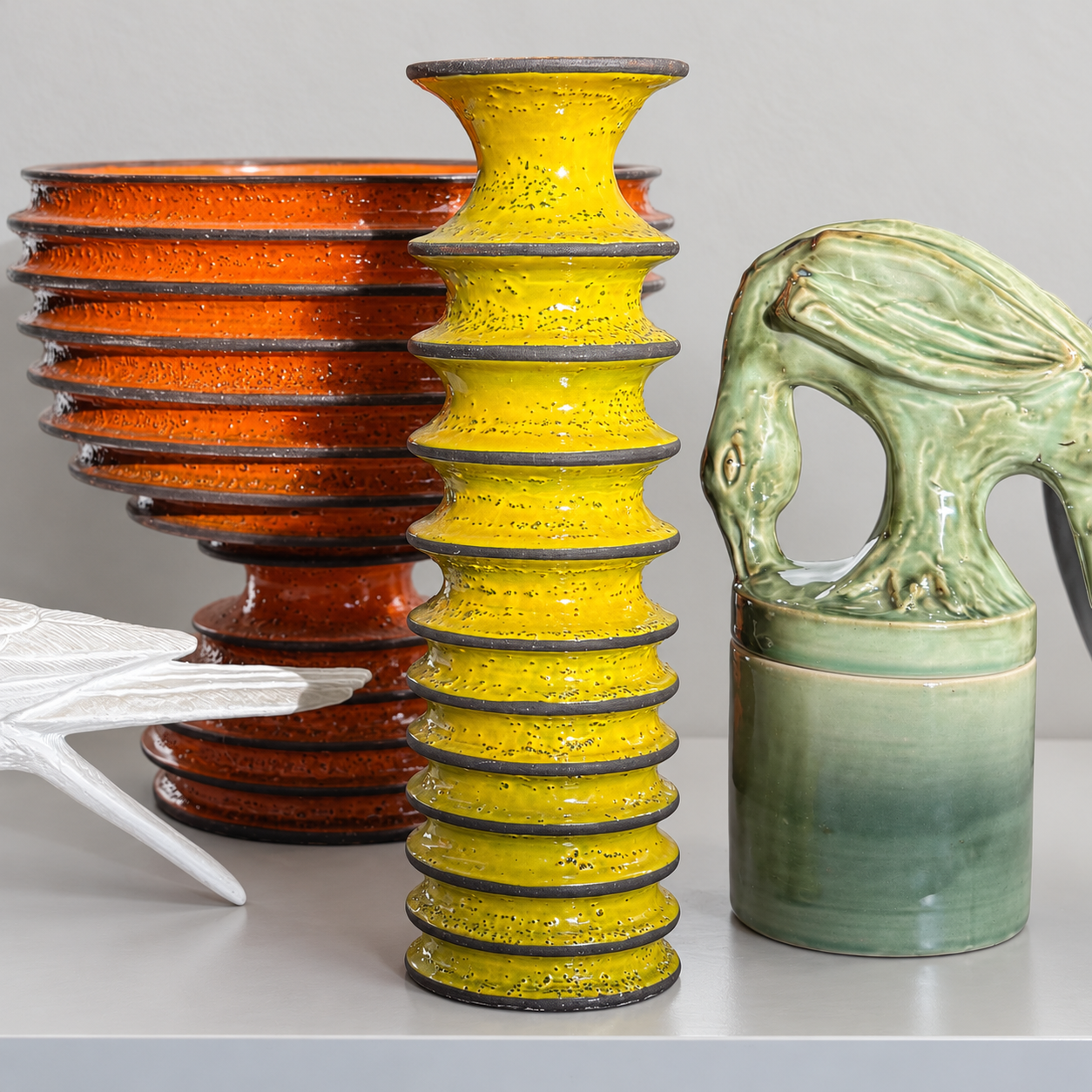
They might share a material, a particular expression or a slightly ridiculous shape. Sometimes the connection is obvious; sometimes it’s something you feel before you can explain it.
That’s where collecting becomes particularly enjoyable for me. Finding the relationship is part of the pleasure. Objects from different places, periods or price brackets can suddenly make sense beside one another. A piece of art, a vintage toy and a charity-shop find might share a colour or an attitude. Putting them together changes how you see each one. Something quite ordinary can become more interesting in good company.
And with three, there’s room for an odd one out - a piece that interrupts the pattern just enough to make the group work.
A small sense of completion There’s also something manageable about three. It can feel like a complete little collection without needing to become an exhaustive one.
I don’t necessarily want every version, every colour or every release. Sometimes three gives me enough variety to enjoy the idea. A small family of objects, with their similarities and peculiarities intact.
Of course, this is all a theory applied after the event. I’m usually following my eye rather than counting. The explanation arrives later, once the objects are home and I’m trying to find somewhere to put them. But perhaps that’s part of collecting too: noticing your own habits through the things you choose.
One catches my eye. Two makes a connection. Three becomes a collection.