
Look at This
When Shrigley Meets Matisse
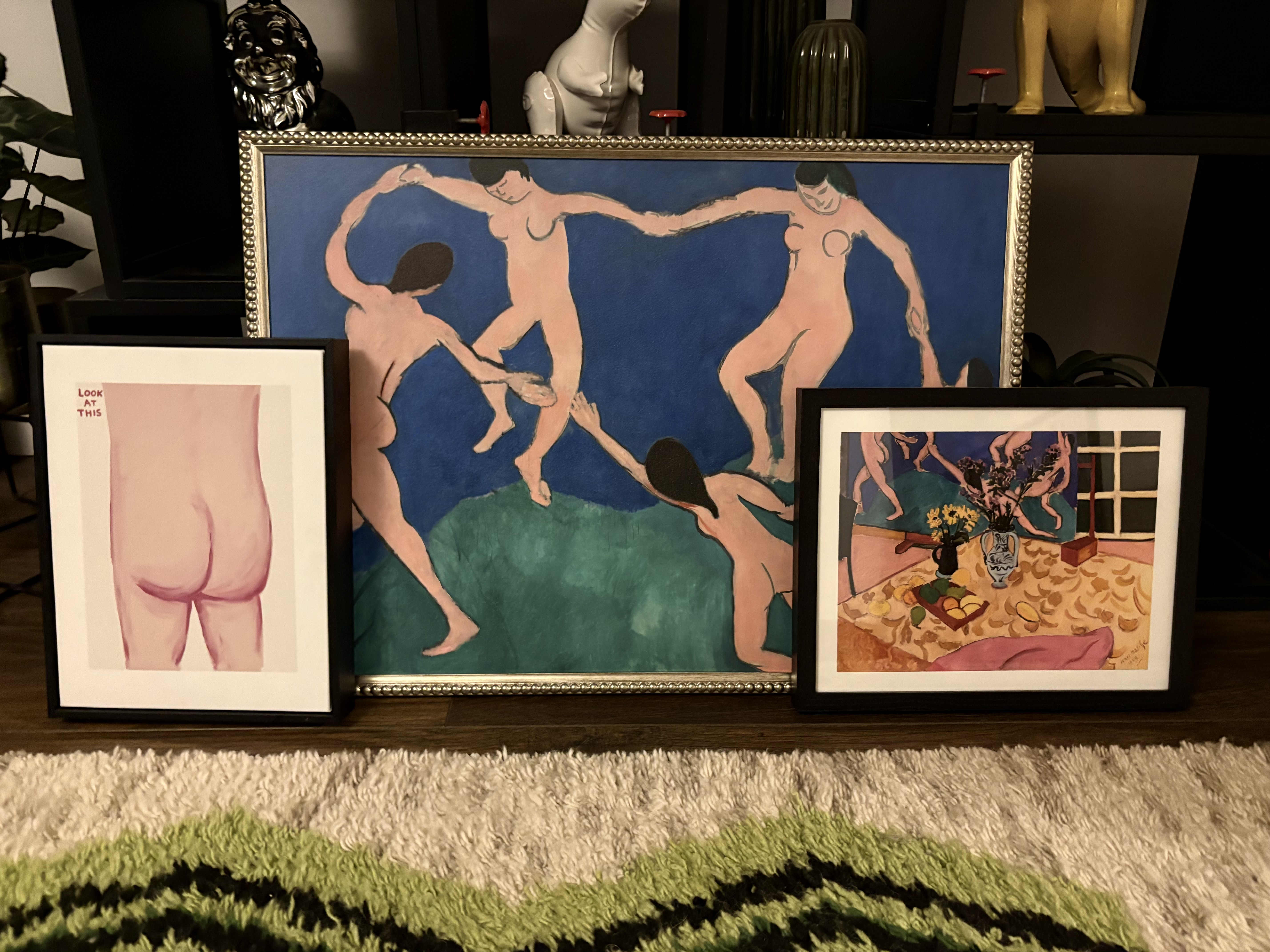
Sometimes putting two pictures beside each other reveals something you hadn’t noticed before.
David Shrigley’s Look at This and Henri Matisse’s Dance might seem an unlikely pairing. One presents a rather unapologetic bum. The other gives us a circle of dancers. Yet, side by side, their pink bodies, flowing outlines and disregard for perfect anatomy begin a surprisingly lively conversation.
Both show how an apparently simple image can have plenty going on beneath the surface, and, in Shrigley’s case behind.
Simple shapes, strong feelings Matisse’s dancers stretch, twist and reach across broad areas of blue and green. Their bodies are simplified, their features barely described. The energy comes from curved outlines, colour and the spaces between them.
The composition is immediately readable, but it rewards a longer look. Follow the arms around the circle and your eye starts dancing too.
Shrigley’s figure has a different kind of presence. Enlarged, cropped and stripped of context, the body becomes almost a landscape of pink shapes. Its uneven contours and visible brushwork give it an awkward, unmistakably human character.
Where Matisse’s figures seem carried along by movement, Shrigley’s feels wonderfully, stubbornly still. The dancers are throwing themselves into the rhythm; the bum appears to have missed the bus.
The sophistication of looking naïve “Naïve” can be a useful word for the directness of these images, provided it doesn’t suggest a lack of skill.
Here, simplicity is an expressive choice. A polished anatomical study would create an entirely different experience. The irregular lines and exaggerated proportions are doing much of the work.
Matisse’s influential approach helped expand what painting could communicate through colour and form. In Dance, a convincing illusion of depth matters less than the feeling of bodies moving together.
Shrigley’s deliberately unpolished visual language creates its own connection with the viewer. It feels approachable, sometimes ridiculous, and familiar in the way a quickly scribbled thought can be. Then the thought lingers longer than expected, rather like an awkward joke that refuses to leave the room.
A body, a joke and an invitation The words Look at This add another layer.
Every artwork asks for our attention. Shrigley makes that request explicit, then gives us a subject that gently punctures the seriousness of the occasion. We look because we’ve been told to, and may find ourselves wondering what, exactly, we expected to see.
Beside Matisse, the joke becomes richer. The nude body can suggest freedom, rhythm and collective joy. It can also be ungainly, funny and faintly embarrassing. A change of pose, framing and context shifts the whole mood.
Pictures within pictures There’s another connection worth exploring: both artists bring an existing painting into a new image.
Matisse included his own Dance in Nasturtiums with the Painting “Dance” I (1912), setting flowers before the dancers. The earlier painting becomes part of a fresh composition, its flowing bodies entering a conversation with curling leaves and stems.
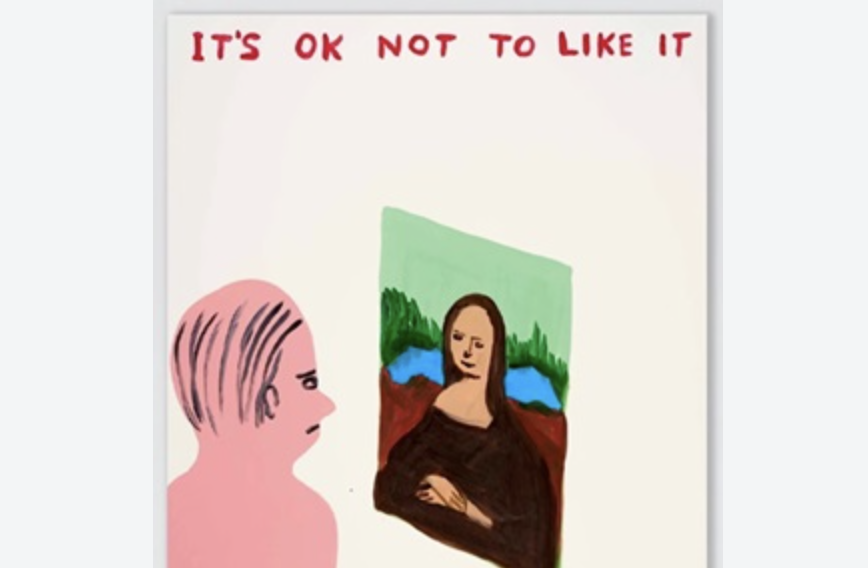
Shrigley takes a different approach with It’s OK Not to Like It. A pink figure faces a simplified version of Leonardo da Vinci’s Mona Lisa. Here, the picture within the picture becomes an opportunity to explore our relationship with famous art.
The words offer permission to have an honest response, even when faced with one of the world’s most celebrated paintings. Recognition and reputation don’t have to decide our taste.
We can read these two compositions as different invitations: Matisse encourages us to explore relationships between shapes, colours and objects; Shrigley makes room for the viewer’s opinion. One invites us to follow the curves; the other lets us shrug.
The pleasure of an unexpected pairing There’s no need to claim a direct influence to enjoy the resemblance. These works share curved forms, pink flesh and an economy of detail, while taking us somewhere emotionally different.
That is part of the pleasure of collecting and arranging pictures: discovering relationships that weren’t planned.
Here, Matisse brings the dance. Shrigley brings the cheek.
Both give us a reason to keep looking. One may even leave us wondering whether the bum is dancing too, just very slowly.